While higher borrowing costs, construction pressures and economic uncertainty have made many buyers more selective, the Sunshine State has emerged as one of the strongest commercial property markets in the country.
In 2025, Queensland commercial property transaction volumes grew 61.1% to $21.35 billion, capturing nearly a quarter of national activity, while Victoria recorded a decline in dollar volumes.
For investors, the shift is about more than short-term momentum. It reflects a broader reallocation of capital toward markets with population growth, infrastructure investment, tight supply, and stronger income fundamentals.
At premium property investment group Rethink Group, the shift is becoming increasingly visible through its commercial property arm, Rethink Investing.
The investors still moving in the current market are less focused on speculative uplift and more on income-producing assets in supply-constrained locations, particularly across industrial, essential retail, and service-based commercial property.
Population growth is reshaping the investment map
Queensland’s population story remains one of the clearest drivers of investor interest.
ABS data shows Queensland added 97,300 people in the year to September 2025, with the state attracting 19,092 people through net interstate migration, the strongest interstate migration result in the country.
By comparison, NSW lost 23,353 people to interstate migration over the same period.
That population growth has direct commercial property implications.
More residents mean greater demand for logistics, warehousing, medical services, childcare, supermarkets, convenience retail, and local business services.
For investors, these are not abstract macro trends. They translate into tenant demand, rent growth and lower vacancy across the right assets.
Brisbane’s office market is standing apart
Brisbane has also been one of the standout office markets in the Asia-Pacific region.
Knight Frank research found Brisbane recorded the strongest prime office rental growth of the 23 cities tracked across Asia-Pacific in the 12 months to Q1 2024, with rental growth of 6.8%.
The research also pointed to limited new supply and ongoing tenant demand as key factors supporting the market.
That performance matters because it contrasts sharply with the broader narrative around office property. While some CBD markets continue to grapple with hybrid work, elevated incentives, and weaker demand, Brisbane has benefited from a comparatively tighter supply-demand balance.
For commercial investors, that makes Brisbane less a speculative play and more a market where rental growth is being supported by genuine occupier pressure.
Industrial remains one of Queensland’s strongest drawcards
\Nationally, industrial property remained Australia’s most-traded commercial sector in 2025, accounting for 31.1% of transaction volumes and reaching $26.58 billion, up 27.6% from the previous year.
Ray White Commercial noted that low vacancy, limited development pipelines, e-commerce demand, and high replacement costs are continuing to support the sector.
In Brisbane, demand is particularly strong along trade and logistics corridors where well-located stock remains difficult to replace. Rethink Investing says it is seeing multiple tenant expressions of interest on quality industrial assets before they are formally listed, reflecting the imbalance between occupier demand and available supply.
That dynamic is important for investors because tight vacancy does more than support rental growth. It can also reduce leasing risk and strengthen the underlying value of well-located assets.
Regional Queensland is no longer being overlooked
While Brisbane attracts much of the attention, regional Queensland is increasingly on the radar of interstate investors.
Markets such as Mackay, Townsville, and Rockhampton are drawing interest from buyers seeking stronger yields, national tenants, and essential-service assets.
Townsville, for example, recorded $272 million in commercial property sales across 80 transactions in 2025, with Colliers describing the market as resilient despite limited stock and a more cautious business environment.
For investors priced out of prime metropolitan assets, regional Queensland can offer a compelling income profile. The key is asset selection.
Strong leases, tenant quality, location, local economic drivers, and future re-leasing prospects matter more in these markets than headline yield alone.
The Olympics is not the whole story

The planned Brisbane Olympic Stadium (conceptual rendering)
The Brisbane 2032 Olympic Games remains a visible part of Queensland’s growth narrative, but experienced investors are not buying on a single-event thesis.
The more important story is the infrastructure pipeline being accelerated around the Games. Transport links, precinct renewal, public amenity, and major project investment can reshape commercial corridors well before the event itself.
This is a trend seen at Rethink Group, where investors are increasingly looking past the Olympic headline and focusing on the fundamentals underneath it.
The opportunity is not simply that Brisbane will host the Games in 2032, but that major infrastructure, population growth, and commercial tenant demand are now intersecting in key corridors.
This is the investment case sophisticated buyers are watching closely, because the benefits of that infrastructure spend are expected to extend well beyond the event itself.
The Gold Coast and Sunshine Coast are maturing
The Gold Coast and Sunshine Coast are also moving beyond their traditional reputation as lifestyle-driven markets.
Ray White Commercial has pointed to Queensland’s appeal extending beyond Brisbane, citing industrial demand along growth corridors, retail centre resilience, and scarcity of investment-grade stock in locations such as the Gold Coast and Sunshine Coast.
Business migration, population growth, and limited commercial supply are helping these markets mature. For investors, that creates a familiar pattern: secondary markets begin to attract serious capital once occupier demand becomes consistent and supply remains constrained.
Rethink Investing argues that parts of the coastal commercial market now resemble Brisbane five to seven years ago, before the current level of institutional and private investor attention had fully arrived.
Sophisticated investors are still transacting
The Queensland market also highlights a broader two-speed dynamic playing out nationally.
Less experienced investors are more likely to pause while uncertainty remains around rates, inflation and the broader economy. But high-net-worth and experienced investors are still transacting where the fundamentals stack up.
Rethink Investing says its March 2026 result of more than $160 million in a single month, with Queensland contributing significantly, reflects where sophisticated capital is currently being deployed.
The common thread is discipline. Investors are not simply buying Queensland because it is popular. They are buying assets where population growth, tenant demand, income security, and supply constraints support the numbers.
Why Queensland keeps pulling capital north
Queensland’s commercial property market is not immune to risk. Higher debt costs, tenant quality, overpaying for yield, and local market selection remain critical considerations.
But the underlying investment case has become harder to dismiss.
The state is attracting population, infrastructure funding, business migration, and institutional capital.
Brisbane is showing rental growth strength. Industrial vacancy remains tight. Essential retail and service-based assets are drawing defensive capital. Regional markets are offering income profiles that are difficult to find in Sydney and Melbourne.
For investors, the lesson is not that every Queensland asset is a buy. It is that the state’s fundamentals are increasingly aligned with what the current market rewards: income, scarcity, and long-term demand.
That is why buyers are still looking north, even as uncertainty lingers.
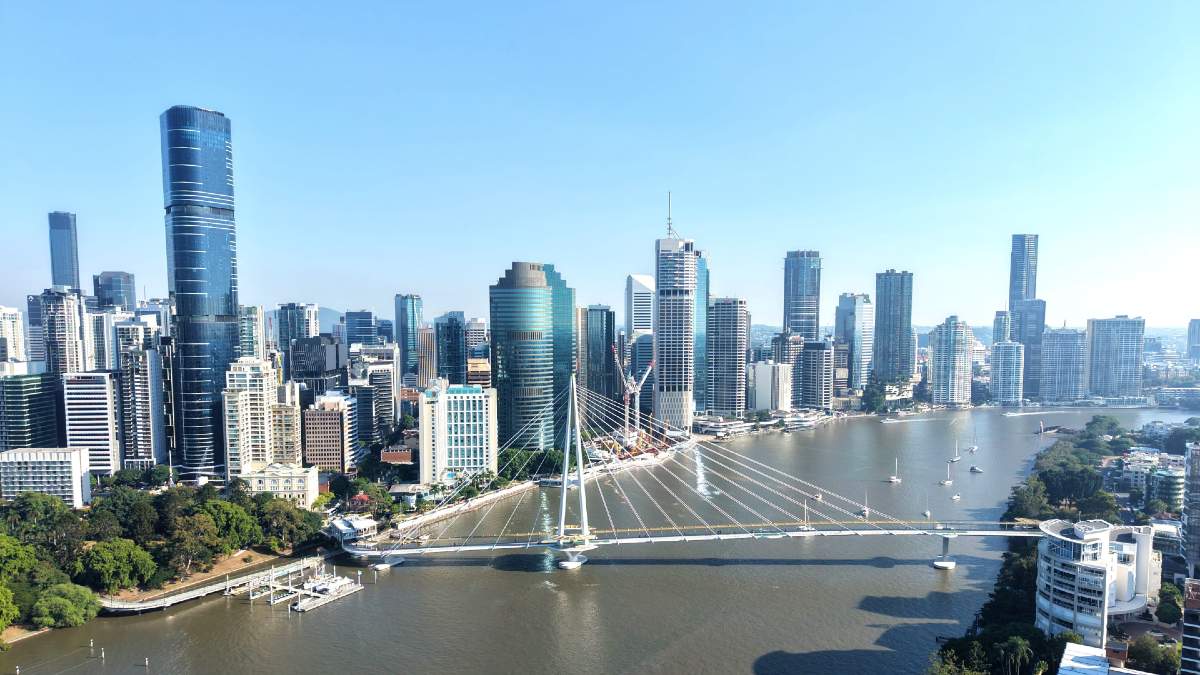
Image by David Pickup on Pexels