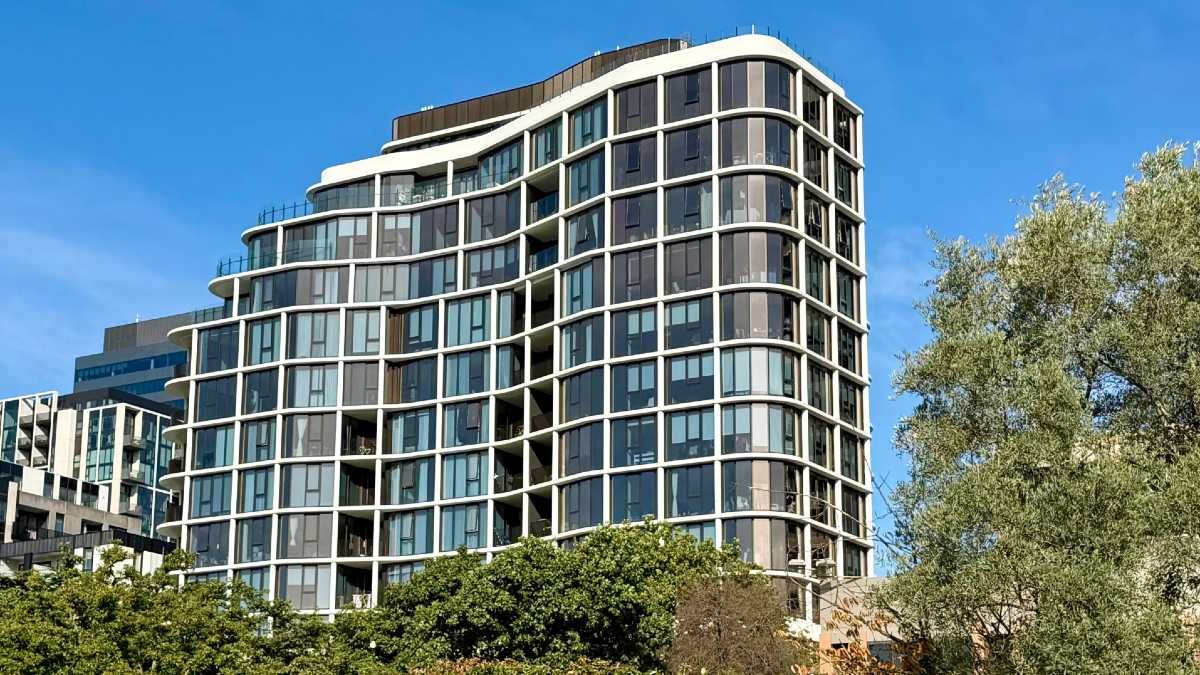
Cotality's latest 'Pain and Gain' report published on Wednesday revealed the two capitals accounted for 83.3% of the value of unit resale losses nationwide in the June quarter.
The findings come as national resale profitability slipped to 95.4%, down from a 21-year high of 96.1% in March.
Median gain also eased from a record $378,000 to $371,000, while median loss increased to $45,000 from $44,000.
The number of resales also fell from 101,000 in the previous quarter to 94,000, as national dwelling values declined 1.5% in the June quarter.
The unit sector continued to lag houses on both profitability and returns, with 90.5% of unit resales generating a profit, compared to 97.8% of profit-making resales in houses.
House resales were also more profitable as well, delivering a median gain of $435,500 versus units' $251,000.
Gerard Burg, head of research at Cotality, said the divergence reflected stronger capital growth in the housing market over the past decade and weaker conditions in some apartment markets.
"The national median house was 36.5% more expensive than the median unit in June, compared with a premium of 21.2% five years ago, which gives some indication of how far the two sectors have deviated," Mr Burg said.
Sydney and Melbourne units account for most investor pain
More than one in five Melbourne unit resales, or 20.8%, recorded a loss in the June quarter.
In Sydney, 11.4% of unit resales sold below their previous purchase price.
By contrast, 4.3% of Melbourne house resales and 1.5% of Sydney house resales were loss-making.
Mr Burg noted units remained significantly more vulnerable than houses, especially in markets where price growth has stagnated for years.
"Most apartment owners are still selling for a profit, but the risk of a loss is considerably higher in parts of Sydney and Melbourne where value growth has been weaker," Mr Burg said.
Australia's two largest capital cities have been leading the current housing downturn, with the latest home value index showing Sydney housing prices have dropped 4.6% over the year to August and Melbourne down 4.7%.
Domain earlier forecast house prices in Sydney will fall by as much as 7% and Melbourne by 8% in FY2027.
Nearly 39% of the value of unit resale losses nationally was concentrated in five LGAs: Melbourne, Parramatta, Stonnington, Port Phillip, and Sydney.
According to Cotality, unit values in the Melbourne and Parramatta LGAs remain below peaks recorded in mid-2017.
Units also dragged city profitability, with 88.6% of city unit resales recording a profit, lower compared with 96.8% of regional units.
Regional markets were more profitable than the capital cities, with 97.5% of resales delivering a profit compared with 94.1% across the capitals.
Recent buyers face greatest risk
While resale profitability remains strong, the report suggests those who bought closer to market peaks are more vulnerable as property values fall.
Cotality found profitable resales were typically held for a median of 9.1 years, while loss-making resales were held for 8.1 years.
The difference was more pronounced for houses, with profitable resales held for a median of 9.3 years compared with just 4.4 years for loss-making transactions.
Mr Burg said many house resales sold for less than they were purchased were those bought around 2022, when home values were near previous peaks before rising interest rates triggered a slowdown.
"Owners who have held their property for nine or 10 years have generally experienced several periods of value growth, giving them a much larger equity buffer when market conditions weaken," he said.
"Recent buyers have had much less time to accumulate those gains and are therefore more exposed when values fall, particularly if they bought close to a market peak."
However, he added longer hold periods do not necessarily guarantee a profit, with outcomes varying by property type and location.
What this means for investors
Although a vast majority of Australian property sellers continue to make a profit, Mr Burg said the June quarter results suggested the impact of "weaker housing market conditions" was beginning to flow through resale outcomes.
"Most sellers are still benefiting from the significant value growth accumulated over the past five years, which is providing considerable protection against the early stages of the downturn," he said.
But with home values falling across more markets, the Cotality research head said this buffer would become "increasingly important in determining resale outcomes".
"There is significant uncertainty around the short-term economic outlook, particularly the direction of interest rates and increasing pressure on household budgets," Mr Burg said.
"If housing values continue to fall, we would expect that to place further downward pressure on resale profitability over the coming quarters."
Image by Joolsmagools on Pexels