For almost 30 years, I have had the privilege of advising dentists, specialists and business owners on some of the most significant financial decisions they will ever make. During that time, I have learnt that property markets are rarely driven by taxation alone. They are driven by confidence.
When confidence is high, investors buy, developers build, banks lend and markets function.
When confidence disappears, transactions slow, projects are deferred and capital moves elsewhere.
Over the past six months, I have noticed an unmistakable change in sentiment. Conversations that previously centred on expansion, acquisition and investment have become considerably more cautious.
Clients are asking whether they should wait. Investors are reconsidering residential property. Business owners are increasingly concerned about the direction of taxation policy and the broader economy.
That change in confidence is no coincidence.
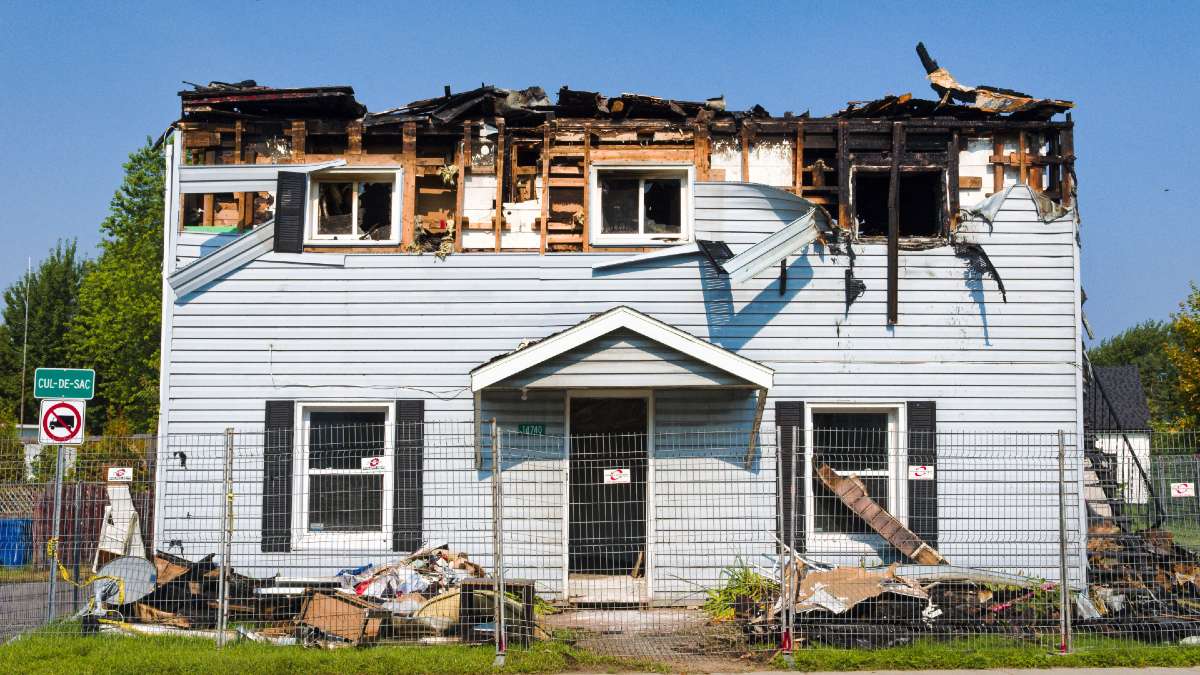
The 2026 Federal Budget has fundamentally altered the residential investment landscape. From 1 July 2027, negative gearing will generally be confined to newly constructed residential properties.
Established investment properties acquired after Budget night will no longer generate rental losses that can be immediately deducted against salary or other non-residential income. Existing properties are grandfathered, while capital gains tax concessions are also being significantly restructured.
See also: What investors should know about negative gearing changes
Combined with interest rate uncertainty, elevated construction costs, geopolitical instability and Australia's existing housing shortage, these changes have created an environment in which many investors are choosing to pause.
Ironically, I believe the conditions now weakening the market will ultimately create the foundations for its recovery.
History has already given us an answer
Governments occasionally have the opportunity to conduct large scale economic experiments.
Australia has already conducted this one. In my view, it failed.
Between July 1985 and September 1987, the Hawke-Keating Government restricted the ability of property investors to offset rental losses against income from other sources. Losses were effectively quarantined and carried forward rather than being immediately deducted against salary and business income.
The policy was intended to reduce speculative activity, improve housing affordability and redirect capital elsewhere. Instead, investor confidence weakened, and rents increased sharply in the most supply constrained markets.
Over the two years to September 1987, capital city rents increased by approximately 21.8%. Sydney rents increased by approximately 26.1% and Perth rents by approximately 31.1%.
The policy was abandoned in 1987, and full negative gearing was restored.
Economists continue to debate how much of the rental increase was directly caused by the tax changes. What is difficult to dispute is that the policy failed to deliver the result its proponents promised, rents rose severely in Sydney and Perth, and the government reversed the policy within little more than two years.
That should have been the end of the experiment.
Instead, 40 years later, another Labor government appears determined to revisit a policy imposed on Australia that not only increased rents for those who could least afford it but discouraged the private investment on which our rental market depends.
This policy decision is profoundly astonishing when one considers the significant change in circumstances between then and today.
Australia's population in the mid-1980s was approximately 16 million. At 31 December 2025, it was 27.8 million and continuing to grow.
In practical terms, Australia now has nearly 12 million more people requiring somewhere to live than it did when the Hawke-Keating experiment was conducted.
At the same time, Australia has an acknowledged housing shortage. Construction costs remain high, financing is difficult, labour remains constrained, and too many approved projects are not commercially viable.
The National Housing Supply and Affordability Council expects approximately 980,000 homes to be delivered during the five-year National Housing Accord period – well below the government's target of 1.2 million which is not expected to be reached until September 2030.
Negative gearing then and now
|
Measure |
Hawke-Keating 1985 |
Labor's 2026 Budget |
|
Commencement |
July 1985 |
July 2027 |
|
Treatment of rental losses |
Quarantined from other income |
Generally quarantined for post-Budget established properties |
|
Existing holdings |
Historical arrangements changed at the time |
Properties held before Budget night grandfathered |
|
Housing environment |
Smaller population and housing system |
Acute affordability and supply constraints |
|
Approximate Australian population |
16 million |
27.8 million |
|
Policy outcome / prediction |
Reversed in 1987 |
I predict eventual reversal |
Economic policy should learn from history rather than repeat its mistakes.
But this Budget is not about fairness. It is not a serious answer to Australia's housing supply problem. It is an attack on Australian aspiration.
When I speak to clients, the message is remarkably consistent. People who have worked hard, built businesses, accepted risk and attempted to create some financial independence feel that they are being penalised for doing precisely what Australians have traditionally been encouraged to do: work, save and invest.
Many also question why the Budget directs so much attention towards taxing aspiration while doing comparatively little to confront what they regard as deeper problems in government expenditure and welfare fraud.
Markets dislike uncertainty

Investors typically struggle with uncertainty.
Financial markets dislike uncertainty more than they dislike bad news. Investors can adapt to almost any taxation system provided they understand the rules and believe those rules will remain reasonably stable.
What they struggle with is uncertainty.
The Budget creates two classes of residential property. Existing investment properties retain their negative gearing treatment, while many established properties acquired after Budget night will not.
New construction receives preferential treatment, although investors must still contend with higher purchase prices, construction risk, delays, defects and financing difficulties.
The immediate response has been predictable.
Investors have withdrawn, buyers have become more cautious and more properties have remained available for purchase.
The Australian Bureau of Statistics reported that the number of new investor housing loan commitments fell 5.3% during the March quarter of 2026, while their value fell 3%. Across all dwelling borrowers, the number of new commitments fell 6.2%.
Subsequent industry reporting has suggested an even sharper reduction in investor applications following the Budget.
This initial withdrawal has increased the stock available to the buyers who remain in the market. Properties are taking longer to sell; purchasers have more choice and vendors have less negotiating power.
That is why the market is currently weak.
However, it is also why I believe the weakness has a limited lifespan.
Early indicators of weakening demand
|
Indicator |
Latest reported movement |
|
Number of new investor loan commitments |
Down 8.6% June quarter 2026 |
|
Value of new investor loan commitments |
Down 10.2% June quarter 2026 |
|
New dwelling loan commitments |
Down 5.4% June quarter 2026 |
|
Total dwelling approvals |
Down 3.6% July 2026 |
|
Private dwellings excluding houses approvals |
Down 0.4% July 2026 |
Source: ABS
See also: Mortgage statistics in Australia
The forgotten consequence
The government's theory appears to be that removing tax incentives from established residential property will redirect investment into new construction.
That sounds straightforward in a Budget paper. But the real property market is considerably more complicated.
Developers require pre-sales before banks will fund construction. Investors form an important part of that pre-sale market.
If those investors become uncertain about taxation, interest rates or future property values, they defer purchasing. Without sufficient pre-sales, finance is not obtained. Without finance, approved projects do not commence.
Building approvals are already volatile. In March 2026, approvals for private sector dwellings other than houses – principally apartments and other higher-density housing – fell 26%. After a partial improvement, they fell another 10.4% in May.
Approvals are also not homes. As the Planning Institute of Australia has observed, many approved projects are not proceeding because they do not stack up financially or lack the infrastructure needed for development.
Reducing investor confidence in this environment is not a housing supply strategy. It risks making an existing supply problem worse.
My proposition
The withdrawal of investors has temporarily increased the amount of established residential property available for sale. There is presently sufficient stock for the reduced number of purchasers in the market, and that imbalance is placing downward pressure on prices.
However, that stock will not last indefinitely.
Owners of investment properties acquired before Budget night retain a valuable grandfathered taxation position. If they sell, that protection is lost. They therefore have a strong financial incentive to retain those properties rather than bring them back to market.
Commonwealth Bank has similarly identified that grandfathering is likely to create a "lock-in effect" by giving existing investors a greater incentive to hold.
As the properties already listed are gradually purchased, the flow of replacement stock will diminish. At the same time, weaker investor demand and development feasibility may reduce the future supply of newly completed dwellings.
The result will be a tightening market.
This is not complex economics. It is the basic operation of supply and demand. When available supply falls below demand, prices rise until the market finds a new equilibrium.
My expectation is that the existing stock overhang will largely be absorbed by October or November 2026.
Grandfathered owners will be reluctant to sell, new supply will remain constrained, and the balance of negotiating power will begin shifting back towards vendors.
My prediction: Melbourne Cup Day 2026
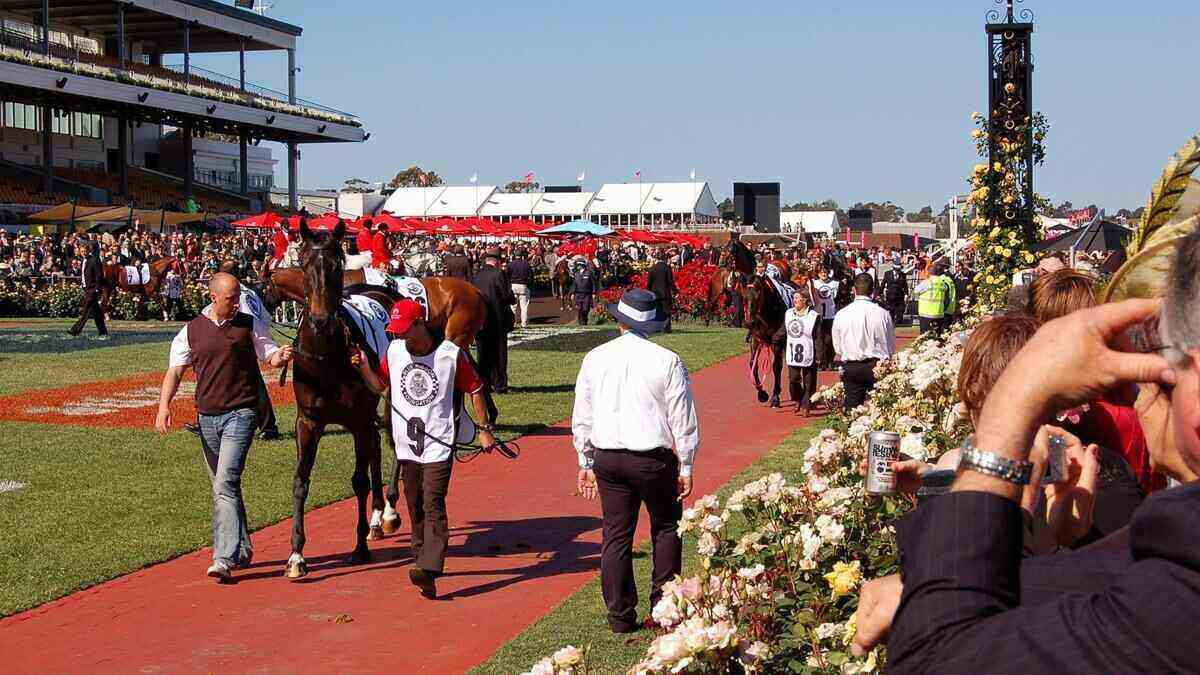
The starter's pistol on Melbourne Cup Day 2026 may signal more than the start of a race.
If I were to nominate the bottom of the Australian residential property market, I would nominate Melbourne Cup Day 2026.
But not because of horse racing.
Melbourne Cup Day is the starter's pistol for the Australian festive season. Christmas functions commence, the weather improves, businesses begin looking towards the following year and the national mood becomes more optimistic.
Sentiment matters because residential property is not merely a financial asset. It is purchased by people, and people make decisions based upon confidence as much as arithmetic.
By early November, I expect much of the excess stock presently available to have been absorbed. I also expect the market to understand more clearly the effect of the Budget, the direction of interest rates and the availability – or lack – of future housing supply.
The combination of reduced stock and improving sentiment should provide the turning point.
Whether the precise date is correct will be for history to determine. The more important prediction is that the market's weakness will be temporary and that the supply consequences of these reforms will eventually place renewed upward pressure on both prices and rents.
The unexpected winner: Commercial property
One of the most important consequences of the Budget has received comparatively little attention.
The negative gearing changes are directed principally at residential property. Commercial property, including offices, medical suites and professional premises, largely remains within the existing taxation framework.
Capital does not simply disappear when one investment class becomes less attractive. It relocates.
Investors who might have previously purchased another residential property may now consider commercial alternatives. That could improve demand for smaller commercial assets, particularly well-located premises occupied by stable professional businesses.
See also: Why commercial property is defying the housing downturn
For dentists, this creates a potentially important opportunity.
Should dentists think differently?

Should dentists purchase their practice premises?
I have previously written for the ADA about whether dentists should purchase or lease their practice premises. My central view remains unchanged:
Purchasing practice premises must first be considered a business decision.
Security and surety of tenure are critical to a dental practice. Establishing a surgery requires substantial expenditure on fit-out, plumbing, electrical works, cabinetry, equipment, compliance and specialised services. Moving a dental surgery is far more expensive and disruptive than relocating an ordinary office.
A dentist who does not own the premises – or who does not have the protection of a very long term lease – carries a significant business risk.
At the end of a lease, the landlord may demand an unacceptable rent, refuse a renewal or seek vacant possession. The practice may then be forced to incur the enormous financial and operational cost of relocating.
Ownership removes much of that uncertainty. It gives the practitioner control over the premises, greater confidence when investing in the fit-out and a property asset that may ultimately form part of retirement or succession planning.
In the present environment, the commercial and investment cases may begin to align. If capital moves away from residential property and into commercial assets, a dentist purchasing suitable practice premises may obtain both business security and an attractive investment return.
When an investment decision aligns with a genuine commercial need, that is usually a very good outcome.
See also: Where do investors find quality commercial properties
Ask yourself this
If housing is truly at the top of the government's policy agenda, why has the Labor Government introduced policies that attack almost every major asset class – shares, superannuation and even certain pre-CGT assets – while leaving some foreign investor settings comparatively less affected?
Sounds like a cash grab and nothing to do with improving housing policy.
An economy is, at its core, a one large profit-and-loss statement and balance sheet. If governments can't accurately interpret those fundamentals, they can't make well-informed economic decisions.
Whether you're from the older or younger generation, the result is the same:
Australians are being left with less money in their pockets, making it even harder to save, invest and get ahead.
Final thoughts
This article will undoubtedly attract criticism and differing opinions.
Good. Tax and housing policy should be debated.
However, my conclusion is clear. Australia has already tested the proposition that restricting negative gearing will improve housing affordability.
The experiment failed.
Repeating it in a country with nearly 28 million people, an acknowledged housing shortage, constrained development feasibility and an overstretched rental market is not courageous economic reform. It is an extraordinary gamble with the housing security of Australians who can least afford the consequences.
I believe the reforms will weaken the market temporarily, reduce future supply and ultimately place upward pressure on prices and rents. I also believe they will eventually be reconsidered.
Governments on both sides of Australian politics have historically amended or abandoned policies when the electoral consequences became sufficiently serious.
The Hawke Government itself reversed its negative gearing changes in 1987.
If the present reforms contribute to rising rents, reduced supply and growing community dissatisfaction – and if that dissatisfaction begins to threaten the government electorally – it is entirely possible that Labor will modify or repeal parts of the policy itself.
If it does not, a future government may do so.
In the meantime, investors should look beyond the immediate uncertainty. Existing property stock will be absorbed. Grandfathered owners will be reluctant to sell. New construction will remain difficult, and Australia's growing population will still require somewhere to live.
My prediction is that Melbourne Cup Day 2026 will mark the bottom of this residential property cycle.
For dentists, the unintended opportunity may be found in commercial property, and, particularly, the ownership of their own practice premises.
Images from Pexels