
Although these changes were originally announced as proposals in the 2026 Federal Budget, they have now passed Parliament and become law.
From 1 July 2027, the ability to negatively gear residential property will effectively be restricted to new builds, subject to important grandfathering arrangements.
For property investors, that doesn't mean negative gearing is disappearing. But it does mean the tax equation behind buying an established investment property is about to change substantially.
And, in my view, investors need to start thinking about that now rather than waiting until July 2027.
First, what exactly is changing?
Negative gearing occurs when the deductible costs of owning an investment property – including interest, property management fees, repairs, rates and other eligible expenses – exceed the rental income it produces.
Under the existing rules, that rental loss can generally be deducted against the investor's other assessable income, including salary and wages.
For somebody earning a substantial salary, that can make a significant difference to the after-tax cost of holding a property.
See also: How negative gearing works (before the July 2027 changes)
From the 2027-28 income year, however, the rules change for established residential properties caught by the reforms.
Losses from those properties will no longer be available to reduce unrelated income such as salary, wages or business income. Instead, the losses will effectively be quarantined within the residential property investment system.
They will be capable of being used against income from residential property, including relevant capital gains, and unused amounts can generally be carried forward to future years.
That's an important distinction.
The deduction isn't necessarily lost forever; what changes is when, and against what income, you can use it.
Existing investors are protected
Probably the most important message for existing property owners is this: the government hasn't retrospectively abolished negative gearing.
Properties acquired before 7:30pm AEST on 12 May 2026 are grandfathered.
That means somebody who already owned an investment property at that point can generally continue applying the existing negative gearing rules to that property after 1 July 2027.
This includes properties where the contract to acquire the property was entered into before the cutoff, even if settlement occurred later.
So if you already own a negatively geared property, there is no need to panic and certainly no tax-driven reason to rush out and sell it simply because these rules are changing.
In my view, grandfathering may make some existing negatively geared properties more valuable to their current owners than they would be to a prospective purchaser.
That's because the grandfathering attaches to the investor's existing holding. If the property is sold after the relevant cutoff, a buyer of that established property won't generally inherit the seller's ability to negatively gear it against their salary.
New properties become more attractive
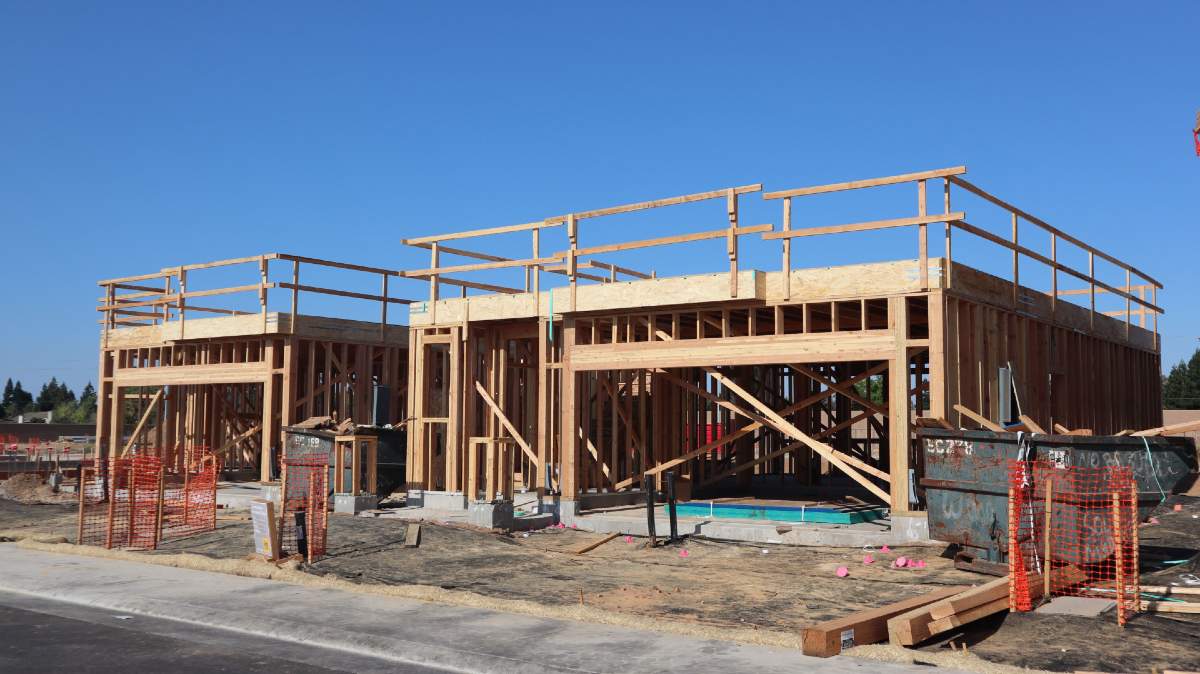
The government's objective is quite deliberate: it wants tax incentives to encourage investors to fund additional housing supply rather than compete with first home buyers for existing homes.
As a result, qualifying new builds will continue to benefit from negative gearing.
For investors, this potentially changes the traditional comparison between new and established property.
Historically, many investors have preferred established properties because they can offer better locations, larger land components and more reliable evidence of rental demand and comparable sales.
New properties, meanwhile, have offered their own tax attractions, particularly greater depreciation deductions.
From July 2027, the tax difference potentially becomes much larger.
If one property allows an investor to deduct a $20,000 annual rental loss against a high salary while another does not, that needs to form part of the investment calculation.
But it shouldn't become the entire calculation.
Buying a mediocre new property simply because it qualifies for negative gearing is no better an investment strategy than buying an overpriced established property simply to generate a tax deduction.
Tax should influence an investment decision. It shouldn't dictate it.
What happens to losses on established properties?
This is where I suspect we'll see considerable confusion.
The new rules don't mean that expenses such as interest suddenly cease to be recognised for tax purposes.
Suppose an investor buys an established property after the grandfathering cutoff and, once the new rules apply, receives $30,000 in rent but incurs $45,000 of deductible property expenses.
There is a $15,000 rental loss.
Under the traditional negative gearing model, that $15,000 might reduce the investor's taxable salary.
Under the new regime, it generally won't.
Instead, that excess amount can be carried forward and potentially used against residential property income in a later year.
That changes the cash flow calculation significantly.
An investor on a high marginal tax rate who previously relied on an annual tax refund to help fund the gap between rent and expenses may find that gap considerably more expensive to carry.
This is why I think cash flow, rather than headline tax deductions, will become an even more important part of property selection.
Don't forget the CGT changes
Investors also need to look at the negative gearing reforms alongside the government's changes to capital gains tax.
From 1 July 2027, the existing 50% CGT discount will be replaced for affected investments by an inflation-based cost-base adjustment, combined with a minimum 30% tax rate on capital gains.
Broadly, gains accruing before 1 July 2027 remain subject to the existing arrangements, while the new system applies prospectively to gains accruing after that date.
There is an important sweetener for new residential construction: investors buying qualifying new builds will be able to choose between the existing 50% CGT discount and the new inflation-indexation/minimum-tax regime when they sell.
See also: Tax planning strategies to reduce CGT when selling an investment property
That potentially gives new property investors a significant advantage at both ends of the investment.
They can continue to access negative gearing while they own the property and potentially retain access to the existing CGT discount when they eventually dispose of it.
For anyone assessing property investments over the next few years, therefore, negative gearing and CGT shouldn't be considered separately.
Will investors abandon established properties?
Some undoubtedly will reconsider them, particularly higher-income investors who have historically factored the immediate tax benefit of negative gearing into their cash flow calculations.
But I don't expect investors to suddenly abandon established housing.
A well-located established property generating strong rent and long-term capital growth may still prove to be an excellent investment. Equally, a positively geared established property is largely untouched by restrictions designed to deal with rental losses.
What I do expect is greater focus on yield.
Investors buying established properties will have a stronger incentive to look for assets that are neutral or positively geared, or at least close enough to neutral gearing that quarantining the loss doesn't create a major cash flow problem.
That could make high-yielding established properties relatively more attractive than low-yielding properties bought predominantly in anticipation of capital growth.
Think very carefully before selling a grandfathered property

Existing investors should also recognise the potential value of their grandfathered status.
Imagine you own an established property that produces a $15,000 annual tax loss and you can continue deducting that loss against salary because you acquired the property before the May 2026 cutoff.
If you sell it and later buy another established property, you may lose that benefit.
That doesn't mean you should hold a poor investment purely because it is grandfathered.
Capital growth prospects, rental yield, interest costs, diversification and your own financial circumstances remain more important.
But the tax consequences of selling and replacing an investment will now need to be considered more carefully.
The biggest mistake investors can make
The danger with any major tax reform is that investors allow the tax tail to wag the investment dog.
We've seen this with negative gearing for years.
Some people talk about "getting money back from the taxman" as though making a $10,000 economic loss in order to receive a fraction of it back through the tax system somehow creates wealth.
It doesn't.
A tax deduction reduces the cost of a loss. It doesn't turn the loss into a profit.
The same principle applies under the new rules.
New builds may become more tax-efficient, but that doesn't automatically make every new apartment or house-and-land package a good investment. Investors still need to examine purchase price, rental yield, vacancy rates, strata costs, location, local supply and long-term capital growth prospects.
Similarly, losing immediate access to negative gearing doesn't automatically make established property a bad investment.
What should investors do now?
For existing investors, the starting point is to establish which properties qualify for grandfathering and retain records demonstrating when those investments were acquired.
Anyone considering another purchase should model the investment under the rules that will actually apply during the period they expect to own it.
That means asking a more sophisticated question than simply, "How much can I claim on tax?"
Look at the property's genuine after-tax cash flow. Consider what happens if interest rates remain higher than expected, rents don't increase as quickly as hoped, or the property is vacant for several weeks.
And compare new and established properties on their investment fundamentals as well as their tax treatment.
The Australian property investment landscape isn't ending because negative gearing is changing.
But the days when investors could assume that the tax system would automatically absorb part of the annual loss on any residential investment property are coming to an end.
From July 2027, the distinction between new and established housing becomes much more important – and investors who understand that distinction before they buy will be in a far better position than those who discover it when they prepare their tax return.
Images from Pexels