After nearly five years of strong growth that saw Perth property prices almost double, the market is beginning to ease.
This shift has led to some catastrophic predictions of a property price crash as conditions rebalance.
While that might be true for some other Australian capital cities, Perth is uniquely placed, underpinned by a different set of fundamentals.
See also: National home values fall for sixth consecutive month
While it's clear the Perth market is cooling, the underlying conditions for WA remain strong.
Here are six reasons why the market isn't going to crash anytime soon.
1. It costs a lot to build in Perth
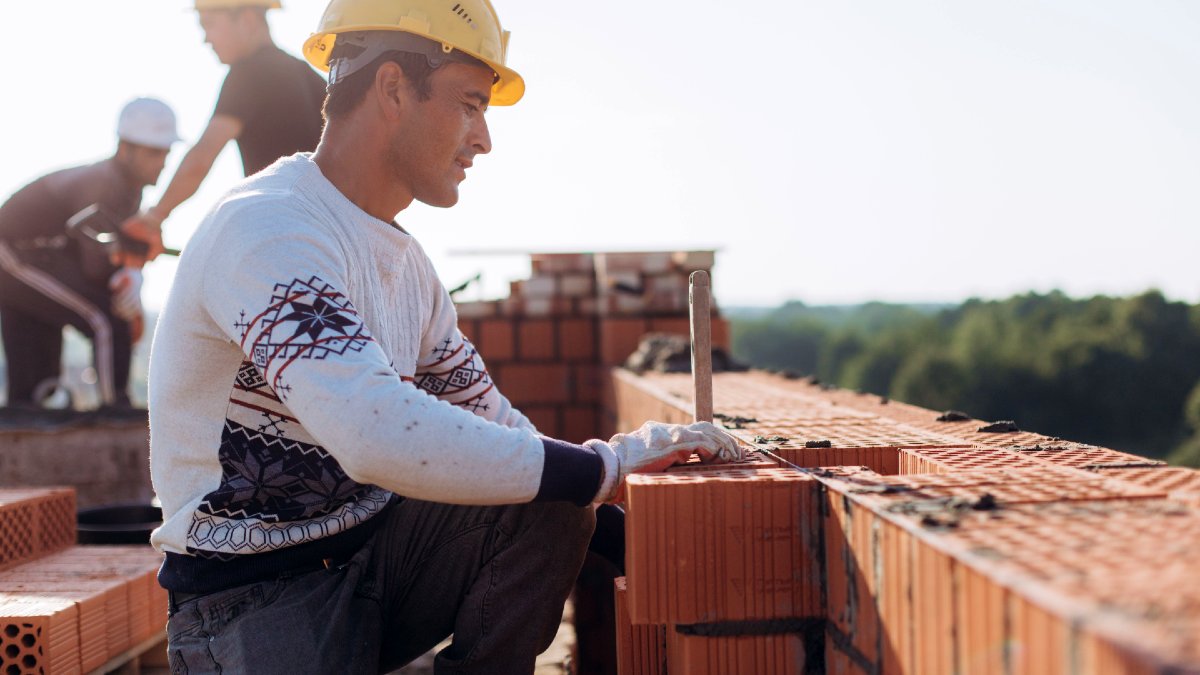
The cost of building a home in Perth has risen by more than 100% since the start of 2020, driven by two key factors: materials and labour.
Materials costs have climbed on the back of inflation, while a persistent shortage of tradespeople has pushed labour costs even higher.
It's been well documented just how much bricklayers have been earning in recent years, but the same pressure extends across other trades, including electricians and plumbers. A large part of the shortage comes down to a 'trade drain', with many tradespeople increasingly choosing higher-paying roles in the resources sector over residential construction in Perth.
2. Existing housing supply remains constrained
The number of properties listed for sale in Perth has more than doubled over the past year, from just over 3,000 to around 7,500 as of September 2026.
Despite this jump, listings remain well below pre-COVID levels, when the market consistently sat between 10,000 and 14,000 properties for sale over a five-year period.
Right now, homes are selling within about three weeks on average, and in some suburbs, the median time to sell is under 14 days.
Well-presented family homes in desirable suburbs continue to attract strong interest. For example, one property for sale in Perth's inner west that we're aware of drew more than 40 groups through in a single weeknight viewing.
See also: Property prices aren't moving the same way across Australia
3. New housing supply is slow to come online
While dwelling commencements and completions are trending higher, new stock remains slow to hit the market.
Slow council approvals and an ongoing shortage of tradespeople continue to weigh on build times.
Perth also builds differently to much of the rest of the country.
The large majority of homes here are still double brick, and two-storey homes typically use a suspended slab – both of which extend build times considerably compared with other construction methods commonly used elsewhere in Australia.
Adding to the pressure, multiple builders and developers reported emerging concerns that Perth may be facing another brick shortage, with wait times currently stretching to 6-12 months.
4. Iron ore and gold prices remain strong
The resources sector is the engine room of WA's economy, and prices for both iron ore and gold remain healthy, underpinning the state's jobs market.
Iron ore has traded comfortably around the US$100/tonne range for more than two years, delivering very healthy profit margins for major producers like BHP, Rio Tinto, Hancock Iron Ore and Fortescue.
Gold, meanwhile, remains well above US$4,000 an ounce, which is well-above its long-run historical average.
This has supercharged WA's gold sector, which, unlike iron ore, is mostly made up of small and mid-sized miners and exploration companies.
Existing producers are spending big to expand operations while explorers are pushing to develop new deposits, both of which are supporting strong demand for engineers across the state.
5. Energy prices remain high
WA's massive gas industry is another pillar of the state's economy, and current conditions are firmly in its favour.
With tensions continuing in the Strait of Hormuz, global oil prices remain elevated, which flows through to support pricing for natural gas more broadly.
WA is Australia's dominant gas producer. Most of this gas is exported to international customers across Asia.
Strong global energy prices translate directly into strong revenue for the WA State Government and ongoing demand for local jobs to operate and maintain gas production facilities.
6. Population growth
Western Australia remains the fastest-growing state or territory in the country, a position it has now held for four consecutive years.
The latest ABS data shows WA's population grew by 2.1% in the year to March 2026, the equivalent of around 64,000 new residents.
The bulk of this growth continues to come from overseas and interstate migration, as people are drawn to the state's strong jobs market, warm climate and attractive lifestyle.
Our view
Taken together, these fundamentals paint a picture of a market that remains resilient over the long term.
Elevated building costs, constrained supply, strong resources and energy prices, and continued population growth will underpin the market as conditions shift.
With this in mind, we can expect conditions to cool, rather than collapse.
The only scenario we see leading to a significant drop in Perth property prices is a sudden fall in commodity prices, or a sharp spike in interest rates. As always, no one has a crystal ball to predict either of those events, but based on the fundamentals we have in front of us today, the Perth property market's foundations remain solid.
Image by Yura Forrat on Pexels