
So you've decided to take the leap into commercial property through your SMSF. You've got a clearer idea of how to find potential assets and navigate the finance side of the equation. The next question is: which sector is actually the best fit for your investment strategy and goals?
With residential property, the selection often boils down to the dwelling, the suburb, and the potential for capital growth.
With commercial real estate, the property is only one part of the story.
Australia's commercial property market consists of several distinct sectors, each with its own demand drivers, tenant profiles, lease structures and risk considerations.
An industrial warehouse, for example, operates very differently from a medical clinic. An office suite and a neighbourhood retail shop attract different tenants and come with their own opportunities and challenges.
Understanding these differences can help SMSF investors narrow their options and focus on assets that support their long-term objectives.
In this guide, we'll break down the key commercial property sectors, explore their pros and cons and examine what first-time commercial buyers should consider before making a purchase.
See the first guide here: Where do SMSF investors find quality commercial properties?
See the second guide here: Is commercial property harder to finance than residential?
Understanding the main commercial property sectors
Before you start inspecting warehouses, offices or retail shops, it's worth understanding that not all commercial properties operate the same way.
Speaking with Your Investment Property, financial strategist and Royal Australian Navy veteran Wayne Bemet said:
"A lot of people assume that because they've done well with houses, commercial is just the same thing with bigger numbers. It isn't."
"In residential, you're buying a property. In commercial, you're really buying a lease and a tenant's business," the National Service Financial founder added.
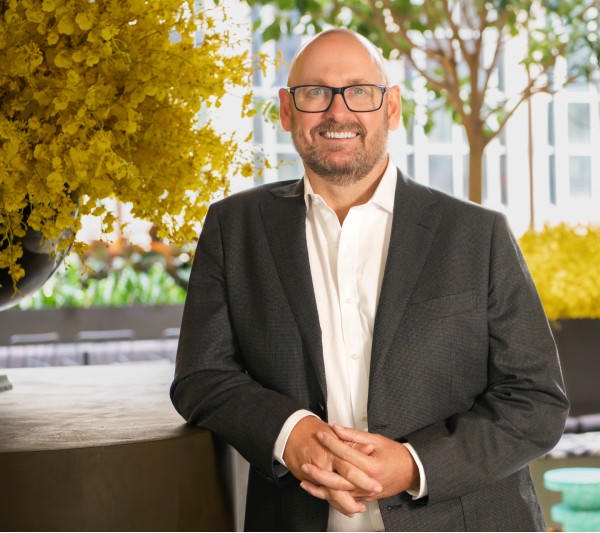
National Service Financial founder Wayne Bemet (image supplied)
The sector you invest in can have a significant impact on the type of tenants you attract, the length and structure of your leases, ongoing management requirements and the risks your SMSF may face.
Let's take a look at the opportunities, challenges and level of complexity each sector poses:
Industrial sector

Industrial properties are generally used for business operations such as manufacturing, warehousing, logistics, storage and distribution. The sector has been supported by demand from e-commerce, supply chains and logistics operators.
In a 2026 report, KPMG says continued expansion of e-commerce and growing demand linked to AI and data-driven industries are "likely to provide support" for industrial assets, thus suggesting industrial remains the most structurally supported sector.
Vacancy rates remain relatively tight, particularly in many industrial precincts such as Sydney.
"The industrial sector's national vacancy is at 3.2%, yields 4.5% to 6.5% net, depending on location. It is the strongest performer nationally over the past decade," Scott O'Neill, founder and CEO of Rethink Group, told Your Investment Property.
Typical property types
-
Warehouses
-
Trade units
-
Storage facilities
-
Distribution centres
-
Factories
-
Logistics facilities
-
Industrial strata units
-
Industrial estates
Typical features
-
High-clearance warehouse space
-
Container access and loading docks
-
Hardstand areas for vehicle storage and manoeuvring
-
Truck access
-
Large roller doors
-
On-site office space
-
Parking for staff and customers
Typical lease structure and rent review provision
-
Net lease
-
Fixed annual increases or CPI-linked rent reviews
Pros
✅ Typically easier for residential investors to understand
✅ Frequently under net lease arrangements
✅ Often benefits from longer lease terms
✅ Big pool of potential tenants
✅ Low management burden
Cons
❌ Can experience long vacancies if the property is highly specialised
❌ Some locations may be affected by zoning or heavy vehicle restrictions
❌ Older assets may require upgrades to remain competitive
Complexity level
Low to moderate
Industrial assets are often considered one of the most accessible commercial sectors for first-time investors because of the relatively straightforward lease structure and extensive tenant demand.
Assets SMSF investors may consider
Small warehouses, trade units, industrial strata properties
Industry professionals recommend first-time buyers consider smaller industrial assets over large distribution centres or manufacturing facilities as they are usually the most accessible entry point in terms of purchase price, tenant demand and management complexity.
"My go-to starting point is small industrial. Nothing fancy. Simple building, low fit-out, low outgoings and a big pool of potential tenants," Mr Bemet said.
"A sparky, an online retailer, a small manufacturer can all use the same space. So if your tenant moves on, you're not waiting around for one very specific type of business to turn up."
Retail sector

Retail property generates income from businesses that sell goods and services directly to customers. The sector ranges from standalone shops and fast-food outlets to neighbourhood shopping centres and large-format retail precincts.
Performance is closely linked to local demographics, accessibility, household spending and foot traffic.
Recent analysis of the sector shows improvements after periods of decline, although retail remains exposed to macroeconomic conditions and consumer sentiment.
Retail property is often subject to state and territory retail leasing laws, which can limit what outgoings you can pass on to tenants (e.g. land tax in some jurisdictions).
Typical properties
-
Neighbourhood shopping centres
-
Convenience retail centres
-
High street retail shops
-
Strip shops
-
Showrooms
-
Shopping centre specialty stores
-
Supermarket-anchored retail centres
-
Fast-food and drive-through premises
Typical features
-
Prominent frontage
-
High pedestrian foot traffic
-
Street exposure and signage
-
Customer parking
-
Vehicle and public transport access
-
Large display windows/shopfronts
-
Extended trading hours
Typical lease structure and rent review provision
-
Net or gross lease
-
Fixed annual increases or CPI-linked rent reviews
Pros
✅ Can deliver attractive yields
✅ Established tenants can provide stable income
✅ Often benefits from longer lease terms
✅ Visible and easy to understand businesses
Cons
❌ Sensitive to economic and consumer spending conditions
❌ Often subject to state retail leasing legislation
❌ Tenant turnover can be costly (leasing commissions, fit-outs)
❌ Vacancies may significantly affect cash flow
Complexity level
Moderate
Success in retail often hinges heavily on tenant quality, location and trading performance. Investors must understand not only the property itself but also the performance of the tenant's business and the strength of the surrounding retail market.
Assets SMSF investors may consider
Retail assets in high density areas, neighbourhood retail anchored by essential services
Foot traffic is one of the most important drivers of retail property performance. Choosing an asset located in high density areas is recommended by industry professionals.
"Retail in high-rise development areas or retail under residential, however it is, must be a high density area," Alex Haddad, director at Property Services Agency, told Your Investment Property when asked which commercial sector SMSF investors may consider.
The reason, according to Mr Haddad, is simple: high density areas are an ecosystem.
"It's a lifestyle. People head down from the complex and shop locally. Most don't drive, and if you know council planning, they are limiting car spaces, hence why people will shop locally," he explained.
Beyond location and foot traffic, Mr O'Neill adds sticking to essential service anchors, such as pharmacy, medical or supermarket tenants if you're looking at retail property as a commercial investment.
"Essential service and neighbourhood retail anchored by pharmacy, medical or supermarket tenants is performing strongly. These tenants do not disappear when the economy softens," Mr O'Neill said.
Office sector

Office property consists of space leased to businesses for administrative, professional and corporate purposes. The sector has undergone significant changes due to hybrid and remote working arrangements, creating varying outcomes between premium and lower-grade buildings.
Vacancy remains elevated across some parts of the office market and demand uncertainty "persists" due to structural shifts in usage. However, take-up remains strong.
Typical properties
-
CBD office towers
-
Suburban office buildings
-
Strata office suites
-
Corporate headquarters
-
Professional services offices
-
Medical office suites (non-clinical)
-
Flexible workspace and coworking facilities
Typical features
-
Reception and lobby areas
-
Private offices and boardrooms
-
Meeting and conference rooms
-
On-site or allocated parking
-
End-of-trip facilities (showers, lockers, etc.)
-
Shared amenities and common areas
-
Lift access
-
Disability access
-
Internet and telecommunications infrastructure
-
Security access systems
Typical lease structure and rent review provision
-
Gross or semi-gross lease
-
Rent-free periods or fit-out contributions may be offered
Pros
✅ Wide range of entry points
✅ Long lease terms possible
✅ Potential to secure established professional tenants
Cons
❌ Ongoing uncertainty around working arrangements
❌ Vacancy rates can be higher than other sectors
❌ Tenant incentives may be required in some markets
❌ Fit-out costs can be significant
Complexity level
Moderate to high
Office property requires more active analysis and understanding of local employment trends, tenant demand, building quality and vacancy conditions.
Assets SMSF investors may consider
Well-located good quality office
Industry experts agree that quality and location matter greatly when it comes to office properties.
Considering the higher vacancy rate relative to other commercial property sectors, "good-quality, well-located space is holding up," according to Mr Bemet.
On the other hand, older suburban strata offices tend to pose a few risk considerations particularly in regards to fit-out costs and rent incentives you might need to shoulder just to land a tenant.
Mr O'Neill strongly emphasises considering "premium CBD office only" for SMSF investors with a huge capital (>$25 million budget) looking at this sector.
"Avoid secondary offices. Full stop. It requires active management, deep market knowledge and tolerance for vacancy that most first-time buyers are not positioned to handle," he said.
Medical sector

The medical sector consists of premises occupied by healthcare providers such as general practitioners, dentists, specialists, physiotherapists, radiology providers and other allied health businesses.
Demand in this sector is generally linked to healthcare services and long-term demographic trends (e.g. Australia's ageing population) rather than broader market conditions or economic cycles.
Additionally, healthcare properties benefit from strong government healthcare expenditure and government-supported funding sources. Demand for services is often less dependent on discretionary consumer spending.
All this contributes to why medical property is often viewed as a defensive asset class.
Typical properties
-
Medical centres
-
Dental clinics
-
GP clinics
-
Day hospitals
-
Private healthcare facilities
-
Specialist consulting suites
-
Diagnostic imaging centres
-
Pathology collection centres
-
Physiotherapy and allied health clinics
Typical features
-
Consultation rooms
-
Treatment and examination rooms
-
Reception and waiting areas
-
Medical-grade fit-outs
-
Disability compliant access
-
Patient parking
-
Public transport accessibility
Typical lease structure and rent review provision
-
Net lease
-
Fixed annual increases or CPI-linked rent reviews
Pros
✅ Considered a relatively defensive asset class
✅ Demand is linked to healthcare needs
✅ Long lease terms possible
✅ Tenants may invest heavily in fit-outs
✅ Can benefit from clustering effects
Cons
❌ Often higher purchase price
❌ Can be highly specialised
❌ Re-leasing can be challenging
❌ Regulatory or healthcare funding changes may affect some operators
Complexity level
Moderate to high
Medical property can provide stable income and strong tenant retention but, since it's highly specialised, requires investors to understand the suitability of the property for healthcare use and the strength of tenant demand within the local market.
Assets SMSF investors may consider
Strata medical suites, dental clinics
Individual consulting rooms or strata medical suites occupied by specialists or allied health providers typically offer a lower entry price than larger healthcare assets, which can thereby suit smaller SMSF borrowing capacities.
Purpose-built premises leased to dentists are becoming increasingly popular among SMSF investors as well, as tenants typically invest heavily in fit-outs and opt for long-term occupancy.
Some dentists choose to own their practice premises through their SMSF and lease the property back to their business. This allows the dental practice to operate from the property while the SMSF receives rental income, provided the arrangement complies to superannuation and tax rules.
"Medical is popular for good reason. Leases are long, tenants are often strong and moving a medical practice is expensive, so they tend to stay put," Mr Bemet said.
"The flip side is specialised fit-out, a smaller pool of replacement tenants and prices that have been pushed up hard by SMSF buyers."
How to determine which sector suits your SMSF
Once you understand the differences between the major commercial property sectors, the next thing to consider before landing on a decision is whether a particular asset suits your SMSF.
According to experts, the right property is not necessarily the one offering the highest yield, but the one that aligns with the fund's income needs, investment timeframe, risk tolerance and liquidity requirements.
Make sure it aligns with your investment strategy
An SMSF investment strategy is a written plan outlining how the fund will invest its assets to achieve the retirement objectives of its members.
Mr Bemet says this should be the starting point for any SMSF considering commercial property, or any investment opportunity for that matter.
"Start with the fund, not the property."
"Every SMSF needs a proper investment strategy covering risk, return, diversification and liquidity. So before you look at a single listing, ask yourself some honest questions."
He says trustees should consider how close they are to retirement and whether the property will eventually support pension payments.
SMSF investors with a longer investment horizon may be better positioned to tolerate vacancy periods and "play a longer game".
Meanwhile, those approaching retirement typically need more predictable rental income and sufficient cash reserves outside of the property, in which case, "a long lease to a solid tenant beats a big headline yield every time".
"And be honest about concentration," Mr Bemet added. "One commercial property can easily be 60%-80% of a fund. That's not automatically wrong, but your strategy has to deal with it head-on."
Match the sector to the fund's long-term goals
Mr O'Neill recommends working backwards from the SMSF's income requirements.
"The sector you choose must produce a net yield that works with the fund's cashflow position without requiring external top up," said the founder of one of the country's leading buyers' agencies for commercial property investors.

Rethink Group founder and CEO Scott O'Neill (image supplied)
In Mr O'Neill's view, sectors with longer lease terms may be particularly suited to SMSFs seeking stable, long-term income streams.
"An SMSF with 15 to 20 years before the pension phase should be buying long leases," he said.
He points to childcare with 15 to 20 years, medical with 10 to 15 years, and industrial with five to 10 years as examples of long-term leases SMSFs may consider.
"A three-year retail lease on a discretionary tenant does not belong in an SMSF."
Keep your approach simple
Luke Bindley, founder of Austin Buyers Agents, says first-time commercial investors are often best served by keeping their approach simple and focusing on assets with strong fundamentals.
"It comes down to understanding what the SMSF is trying to achieve and choosing a property that aligns with the strategy rather than just chasing the highest possible yield," Mr Bindley told Your Investment Property.
He advises SMSF investors to consider factors including location, tenant quality, vacancy risk, rental income, lease structure and long-term demand.
Questions SMSF trustees should ask before choosing a commercial asset
-
Does the property fit the fund's documented investment strategy?
-
How much of the SMSF will be invested in a single property?
-
How many years remain before retirement or pension phase?
-
Does the fund require income now, or is long-term growth the priority?
-
Can the fund withstand a vacancy period without affecting member benefits?
-
Does the lease term align with the fund's investment horizon?
-
Is the tenant and property type likely to remain in demand over time?
What makes a good commercial property regardless of sector
While lease structures, vacancy rates and tenant demand vary across sectors, experts agree that the fundamentals of a successful commercial property investment remain largely the same.
The quality of the tenant, the strength of the lease, the property's flexibility and its ability to generate reliable income are often more important than the sector itself.
Vicki Likoudis, founder of Impacta Commercial Advocates, told Your Investment Property:
"I don't think there is one commercial sector that should automatically be labelled the 'best' first step."

Impacta Commercial Advocates Vicki Likoudis (image supplied)
"I would rather see an investor start with a commercial asset that is easy to understand, has genuine underlying demand, and fits the SMSF's overall investment strategy and cash flow requirements."
Mr Bemet says trustees should assess commercial properties in this order: tenant, lease, building.
Quality tenant
Mr Bemet says investors should examine the tenant's financial strength and business track record. Ask: Who's the tenant, how long have they been trading, and how solid is their business?
Mr O'Neill shares a similar view, arguing that tenant quality should be a key consideration for SMSF investors seeking dependable income.
"The lease means nothing if the tenant cannot pay."
National or ASX-listed tenants are the "safest starting point", according to Mr O'Neill, but should you have smaller business tenants, he recommends seeking additional protections such as personal and bank guarantees and access to financial statements where possible.
"For SMSF, the priority should be the property having a tenant already, it will be easier for the lending [if you're seeking finance]," Mr Haddad added.
Strong lease
Commercial property advertisements frequently highlight attractive yields, but experts warn investors to look beyond the headline figures.
The lease should be carefully reviewed to understand how long the tenant is committed to the property, how rent increases are structured and what expenses remain the landlord's responsibility.
Mr O'Neill says the lease term should be a priority. "Never buy a short lease in an SMSF," he said. "Minimum five years remaining, preferably more."
Longer leases can provide greater certainty of income, particularly for funds approaching retirement or pension phase.
Mr Bindley agrees, adding that investors should examine the property's weighted average lease expiry (WALE), rent review provisions, renewal options, outgoings, obligations and any make-good clauses that could create costs when a tenant vacates.
Worth noting for SMSFs seeking finance - longer lease terms are seen as more favourable by lenders.
Lease structure is another important factor to consider. Check whether a lease is structured as a net lease or gross lease.
Under a net lease, tenants typically pay some or most outgoings in addition to rent.
Gross lease generally leaves more property expenses and outgoings with the landlord.
"The SMSF should not be funding outgoings from the fund's cash," Mr O'Neill said.
"Verify the outgoings schedule in the lease matches what the agent claims. If it is not in the schedule, it is a landlord cost."
Building quality and reletting potential
No matter how strong the current tenant appears, it'd be a good idea to have a plan for when that tenant leaves.
Mr Bemet says this question should be asked before any acquisition decision:
"If this tenant walked out tomorrow, who else would rent it, and how long would it take?"
"If you can't answer that with confidence, keep looking," he added.
Properties with broad tenant appeal generally offer greater resilience and lower vacancy risk.
Bear in mind, carefully assessing the physical asset itself still matters. Appropriate zoning and features such as good location, flexible layout, strong access and adequate parking can make it easier to secure a tenant or a replacement tenant.
"You want to ensure a good pool of potential tenants if the current tenant leaves," Mr Bindley said.
Key checklist for SMSF investors
Committing to a commercial property? Consider whether it has:
✅ A strong and reliable tenant
✅ A long lease with options to renew
✅ Built-in rent review mechanisms
✅ A lease structure that clearly outlines outgoings
✅ Strong tenant demand and reletting potential
✅ Good location, access, parking
✅ Limited future maintenance risks
✅ Alignment with the SMSF's investment strategy
Common mistakes first-time commercial investors make
Chasing yield instead of understanding risk
Many first-time investors are drawn by commercial property's higher yields. After all, it is typically the number most prominently displayed in advertisements. But industry experts are in agreement that headline returns can be misleading.
"If something's offering 9% when everything around it is on 6, the market's telling you something," Mr Bemet said.
According to Mr Bemet, this could indicate underlying risks such as a weak tenant, short lease, poor location or a tired building.
Mr O'Neill agrees.
"A 9% yield on a first business with no trading history and no personal guarantee is not a high return. It is an unpriced risk."
What's a 'quality' yield?
As a rule of thumb, Mr O'Neill says yields between 5.5% and 7.5% on quality assets may warrant closer consideration.
"Above or below that range? Ask harder questions."
Focusing on the building instead of the lease
In residential investing, getting attached to the property is not uncommon. Emotions can get in the way, something investors transitioning to commercial are recommended to set aside.
"I have watched investors fall in love with a well-presented property and overlook a lease expiring in 12 months with no options and no fixed reviews. The building looks great, but the investment is a problem from day one," Mr O'Neill said, reiterating:
"The building is the collateral. The lease is the investment."
Mr Bemet echoes the point, saying a beautiful building with a tenant on six months' notice is "worth less than it looks".
Ignoring vacancy and cash flow risk
Commercial vacancies can be longer and more expensive than residential vacancies, making liquidity a critical consideration for SMSFs.
"You need a cash buffer outside the property to cover outgoings, loan repayments and incentives for a new tenant, while the fund still meets everything else," Mr Bemet emphasised.
Mr Haddad notes investors also often focus on the property's size and yield rather than its reletting prospects, when in many cases, he says, a smaller property with strong demand may outperform a larger asset.

Property Services Agency director Alex Haddad (image supplied)
"You could have a small kiosk in an arcade street frontage or hole-in-the-wall retail that can return a decent amount and have a very low vacancy," Mr Haddad said.
"The size is not important, it is the potential and the features the property has."
Skipping due diligence
Competition for commercial assets can tempt investors to move quickly, but experts warn against cutting corners.
"The deals worth having do not require you to rush," Mr O'Neill said.
Investors should review lease documentation, outgoings, tenant financial strength, building condition, zoning and vacancy risk before committing to a purchase.
Overlooking SMSF rules and compliance
Commercial property ownership through an SMSF comes with additional rules. According to Mr Bemet, trustees can run into trouble over business real property requirements, related-party leasing arrangements, borrowing restrictions and GST obligations.
"If you're borrowing, the property now has to qualify as business real property, which broadly means it's used wholly and exclusively in a business," he said.
"Don't assume. Check. These mistakes can come with a serious tax bill."
Underestimating the capital required
Underestimating how much capital is required is a common mistake experts see first-time commercial investors make.
"Commercial lending at 65% LVR plus acquisition costs means you need approximately 38% to 42% of the purchase price in accessible equity," Mr O'Neill said.
Quality commercial assets often sit in a significantly higher price bracket than the residential properties many investors are accustomed to.
As we explored in the second instalment of this series, having the cash to fund the deposit is not the end of the story.
"That means investors need to think carefully about concentration, borrowing, liquidity and what happens if the property is vacant or requires unexpected capital expenditure," Ms Likoudis added.
Trying to do it alone
Commercial property investing is in a different league from residential investing. Assuming success in residential property automatically translates to commercial investing is another common mistake.
"I see buyers who are overly confident in their own knowledge and refuse to ask for help," Mr Bindley shared.
"If you are a first-time SMSF commercial investor, there is no shame in getting the right advice and having someone experienced look over the opportunity with you."

Austin Buyers Agents founder Luke Bindley (image supplied)
Should SMSF investors follow commercial property trends
Currently, industrial, retail and medical have taken the cake as the most sought-after commercial sectors. Assets under these sectors are driven by strong tenant demand, long leases and, in some cases, government-supported income streams.
"The 'essential services' sectors are definitely in fashion. Investors have been moving money into childcare, medical and neighbourhood retail," Mr Bemet said.
Medical and childcare assets, in particular, have attracted significant SMSF interest as, Mr O'Neill notes, trustees seek stable income.
Industrial also remains in favour as its structural fundamentals "are undeniable", according to Mr O'Neill.
"But popular and right for you aren't the same thing," Mr Bemet said.
Growing demand has pushed up prices and compressed yields in many favoured sectors, meaning you may be paying a premium for perceived safety.
Instead of doing what the market is doing, experts say SMSF investors should focus on fundamentals.
"A well-located, straightforward property you could lease to plenty of businesses, bought at a fair price, will usually serve you better than the trendiest sector at a premium," Mr Bemet said.
Mr O'Neill concurs.
"Buy the right lease. Buy the right tenant. Get the entry price right. The sector is the starting point. Not the ending point."
Disclaimer: This guide provides general information only and should not be considered financial, legal or tax advice. SMSF investors should seek professional advice tailored to their individual circumstances before making investment decisions.
Header and in-text images from Pexels
