Promoted by loans.com.au
When investing in real estate, you have the option to build new or buy an established property. Both options offer certain risks and rewards, so there's no hard-and-fast rule about which option is better.
Your ideal investment property will depend on your goals and budget.
To help you make a more informed decision, we've created a quick guide that breaks down the advantages and disadvantages of a new build versus an established property.
Property options
There are a few ways you can buy or build your investment property. Below are a few options and their pros and cons:
Building a new property
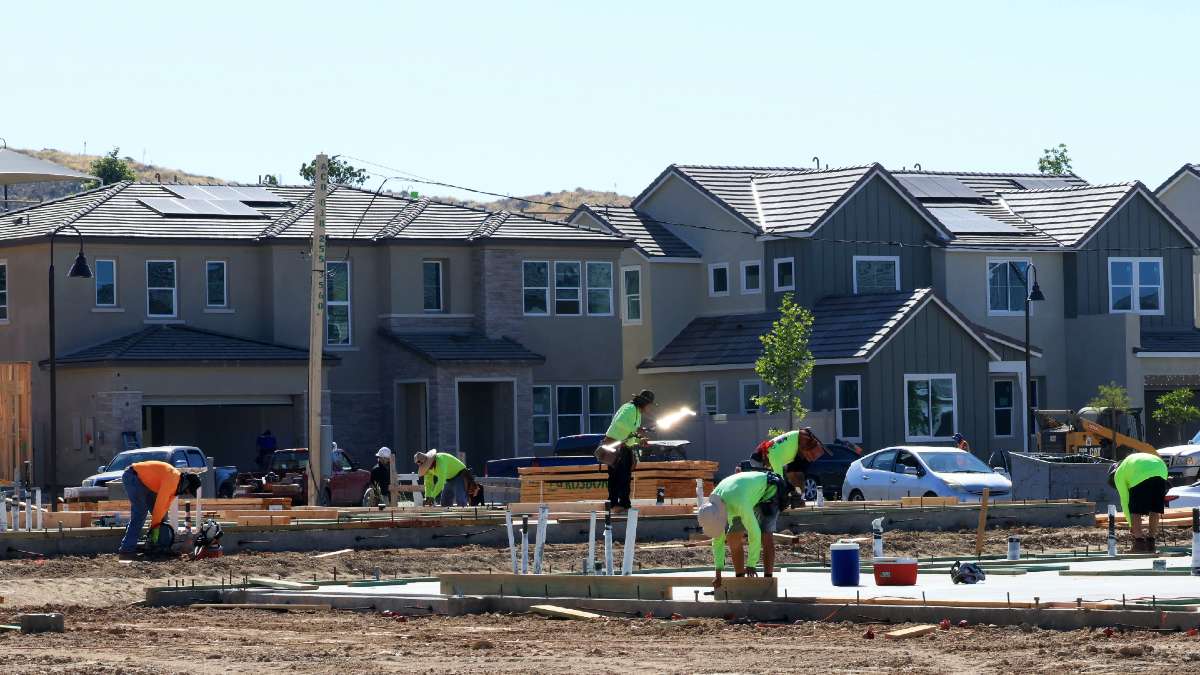
If you opt for a newly built property, there are a few ways you could go about it, like a house and land package, buying off the plan, or buying land and hiring a builder.
A house and land package lets you choose a block of land in a new development where you're offered a range of home designs and layouts. Usually, new developments are found in developing suburbs, so it's best to check that amenities are nearby or if there are future developments planned for the area.
A similar option is buying off the plan, which lets you buy a property that's yet to be built. This is common for apartment complexes that are still in the construction phase of development. Developers typically offer discounts for early buyers. But take note: market conditions could change between exchange and settlement, meaning the property's value at completion may differ from its purchase price.
Lastly, you can buy land and build an investment property. This option offers investors the most flexibility and freedom as they can choose their ideal suburb and build a property with whatever features and amenities they want.
Buying an established property
You usually have more to choose from if you're buying an established property, ranging from houses to townhouses to apartments. The process of purchasing a property is also much quicker than building one.
Buying in an established suburb gives you a better idea of what to expect compared to building in a new development.
Houses are typically the more expensive choice compared to apartments and townhouses. However, some apartments or townhouses can cost more if they're in the CBD compared to houses that are in less urban areas.
When choosing between property types, it's important to consider price, maintenance, location, and potential rental yield.
Value appreciation
Usually, established properties have higher value appreciation compared to new builds. This can be due to several factors such as location, demand, building depreciation, and other market indicators.
Established properties are typically found in sought-after suburbs, which helps hasten value appreciation. It may also be easier for investors to boost the value of established properties through renovation.
Meanwhile, new builds are often located in new developments or up-and-coming suburbs which may not have the same demand. Adding newer features doesn't necessarily translate to better value.
Tax considerations
Recent reforms, as part of the 2026-27 Federal Budget, have changed the way negative gearing and capital gains tax (CGT) work and how investors can capitalise on said tax incentives. When choosing between new builds and established properties, it's important to take this into account.
According to the Australian Tax Office (ATO), negative gearing for residential property investments is limited to eligible new builds. This means investors with new builds may still be able to deduct losses from other income.
Properties held on or before 7:30 pm AEST on 12 May 2026 are generally exempt from these changes. For certain residential investment properties purchased after that date, losses may only be deductible against other residential property income and capital gains, with unused losses carried forward
Upfront costs
The upfront costs for established properties involve the purchase price, stamp duty, and immediate loan fees such as application and establishment fees.
Stamp duty costs may be more expensive for established properties as they're calculated based on the land and building.
Depending on the state or territory and the type of purchase, stamp duty on a new build may be lower than on an established property because duty may be assessed before construction is completed
On the other hand, investors building their investment property need to pay for the land purchase, site preparation and testing, excavation and clearing (if applicable), permits, construction insurance, and relevant loan fees.
The upfront costs when buying an established property are generally more straightforward compared to new property construction. When building a property, you have to pay in stages in line with the construction phases. There are times when the estimated cost at the beginning of construction may not align with the end cost due to delays caused by changes in the price of materials and other external factors.
Loan options
For property purchases, you'll likely need an investment home loan. This works like a standard home loan where you borrow money to fund a purchase and pay back the loan plus interest over the loan term.
If you're building your investment property, you'll need a construction investment home loan. In a construction loan, you'll receive the funds in stages as the phases of construction go on. When the property has been completely built and is ready to sell or for occupancy, you'll start making repayments as you would a standard loan.
To learn more about your loan options, get in touch with us at loans.com.au. We have a range of investment home loans and construction loans for you to choose from. Call 13 10 90 or apply online today!
Disclaimer: The information provided in this article is general in nature and does not constitute financial or legal advice. Please seek independent professional advice tailored to your personal circumstances before making any financial decisions.
Image by David Brown on Pexels