
Promoted by Charter Hall
Superannuation funds and institutional investors have historically allocated significant capital to commercial property because of its ability to generate consistent income and deliver long-term growth.
Today, individual investors can access these same benefits through professionally managed Australian unlisted property funds.
An asset class built on income
One of commercial property's most attractive features is its ability to generate regular income.
Unlike many growth-focused investments, a significant portion of total returns from commercial property is typically derived from rental income. This income is supported by lease agreements with tenants and can provide investors with greater visibility over future cash flows.
Most commercial leases contain built-in annual rental increases, often linked to inflation, helping income keep pace with rising costs over time.
For investors seeking dependable income, this can be a valuable characteristic.
The benefit of long-term leases
A key strength of commercial property is the quality of its lease arrangements.
Commercial leases commonly extend for five to 15 years, providing a greater level of income certainty than many other asset classes. These agreements are typically negotiated with established businesses, government agencies and national organisations.
As a result, investors can gain exposure to assets supported by contractual income streams from high-quality tenants.
Funds focused on long weighted average lease expiries (WALEs), such as Charter Hall's Direct Long WALE Fund (LWF), are specifically designed to prioritise income visibility and stability through long-term tenant lease commitments.
Higher income potential
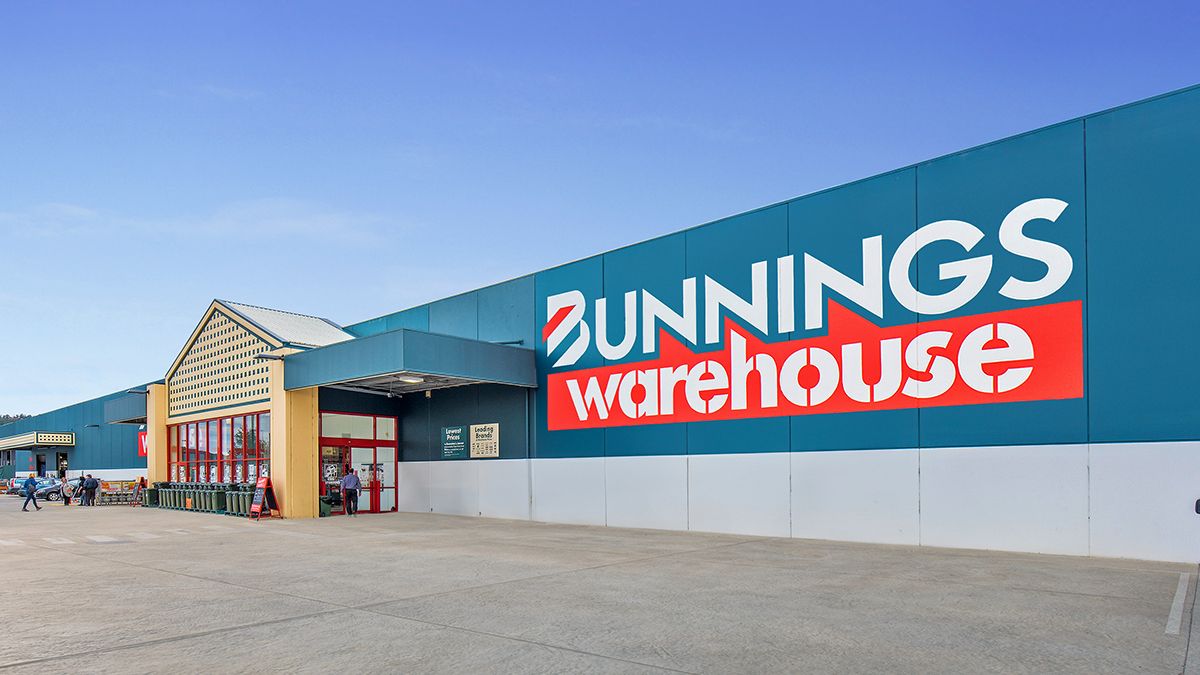
Retail properties are supported by population growth and everyday consumer spending. (Image supplied)
Commercial property has historically provided attractive income returns relative to many traditional investments.
According to benchmark provider MSCI Australia’s unlisted property data, commercial property has delivered long-term returns in the range of 5% to 7.5% per annum*. These returns are generated primarily through rental income rather than relying on asset price appreciation.
Importantly, most commercial property investments are positively geared, meaning they generate income from the outset rather than requiring investors to contribute additional capital to support the investment.
For income-focused investors, this can provide a practical balance between generating cash flow today and building wealth for tomorrow.
Access to diverse property sectors
Commercial property encompasses a broad range of sectors, each driven by different economic forces.
Office properties are influenced by employment growth and business activity. Industrial and logistics assets benefit from e-commerce, warehousing demand and supply-chain infrastructure. Convenience retail properties are supported by population growth and everyday consumer spending.
This diversity gives investors access to multiple growth drivers within a single asset class.
Unlike a single residential property investment, investing through a diversified commercial property fund can provide exposure to numerous assets, tenants, sectors and locations, helping reduce concentration risk while supporting reliable income outcomes.
Diversification beyond shares
Commercial property can also enhance portfolio diversification.
Unlike listed equities, where returns are often influenced by market sentiment and short-term earnings expectations, commercial property returns are primarily driven by rental income and property valuations.
As a result, commercial property has historically demonstrated a lower correlation with share markets than many other growth assets.
For investors building diversified portfolios, this can help improve resilience across different market environments and cycles.
Tax efficiency
Commercial property investments can also provide tax benefits.
Distributions from unlisted property funds often include tax-deferred components resulting from depreciation and capital allowances. While these benefits are not permanent, they can improve after-tax cash flow and enhance the overall efficiency of an investment.
Investors should seek professional tax advice to understand how these features apply to their individual circumstances.
Taking a long-term view

Commercial property investments combine regular income, diversification and long-term growth potential. (Image supplied)
Like all real estate investments, commercial property is best suited to a long-term investment horizon.
The illiquid nature of the asset class encourages a focus on long-term fundamentals rather than short-term market movements.
Over time, factors such as tenant quality, lease structures, active asset management and property selection become the key drivers of investment outcomes.
For investors, this can provide access to a disciplined, income-focused approach to wealth creation.
A structural allocation for long-term investors
Commercial property continues to play an important role in modern investment portfolios because it combines three highly sought-after characteristics: regular income, diversification and long-term growth potential.
Through professionally managed property funds, investors can access institutional-quality real estate that would otherwise be difficult to acquire directly. Supported by long-term leases, quality tenants and tangible assets, commercial property offers a durable foundation for long-term wealth creation.
For investors seeking income today while maintaining exposure to future growth, Australian commercial property is a compelling investment opportunity.
About: Charter Hall is Australia’s leading diversified property funds manager. For more than 35 years, we have combined scale, expertise and a strong performance track record to create long-term value for our investors, tenants and communities.
*The Property Council of Australia/MSCI Australia All Property Index
Disclaimer: This article is not intended to be and does not constitute a Product Disclosure Statement or disclosure document as those terms are defined in the Corporations Act 2001 (Cth). It is not an offer to buy or sell any financial product and should not be relied on in making an investment decision. The information is general in nature and does not take into account your investment objectives, particular needs or financial situation. Whilst all care has been taken in preparation of this article CHDPML does not give any representation or warranty as to the reliability, completeness or accuracy of the information contained in this article. CHDPML does not accept liability for any inaccurate, incomplete or omitted information of any kind or any losses caused by using this information.
Any forward-looking statement in this article is predictive in character and may be affected by inaccurate assumptions or by known or unknown risks and uncertainties and may differ materially from results ultimately achieved. Past performance is not a reliable indicator of future performance.
The comparison to each asset class is not intended to compare the risks of holding an investment in the product to a holding in a different asset class. The returns of different asset classes come with distinct risks which are demonstrated in the information provided above.
Photographs used in this article are for illustrative purposes only. Unless otherwise specified, photographs are of assets in Charter Hall funds.
All figures stated in this article are as at 30 June 2026.